Flat Battery Or Failing Alternator? Tell Them Apart In One Minute Before You Call A Tow Truck
These two are the most common causes, and the most commonly mixed up. The end symptom looks identical — a dead car. What you should do next is completely different.
Signs of a flat battery: dashboard lights dim the moment you turn the key, the engine cranks slower and slower, the power windows drag, the clock and radio reset themselves. Usually there is an obvious reason behind it — headlights left on overnight, the car sat unused for a week or two, or corroded terminals.
A failing alternator behaves differently: the car starts fine on a jump, then dies again the moment the jumper cables come off. The red battery icon stays lit while the engine is running. Headlights go dim at idle and brighten again when you blip the throttle.
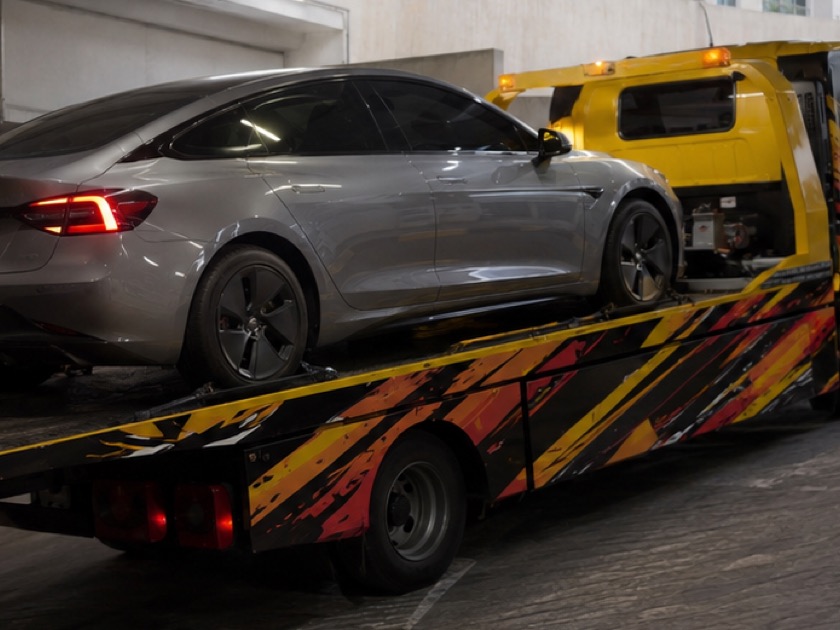
Why does the difference matter? A flat battery can be rescued on the spot. A dead alternator means the car will cut out again — possibly in traffic, possibly at 2 in the morning. That is a case for car towing straight to the workshop, not for jump starting it over and over.
Got a voltmeter in the car? A healthy battery reads 12.4V–12.7V with the engine off. With the engine running it should climb to 13.5V–14.5V. If it stays around 12V or drops, the charging system is not doing its job.
- Step 1 — Jump start the car as normal and let the engine run.
- Step 2 — Disconnect the jumper cables completely.
- Step 3 — Leave the engine idling untouched for about a minute.
- Step 4 — Switch on the headlights and the aircond, and watch whether the idle stays steady or starts hunting.
- Step 5 — Car stays alive and the lights hold steady? Battery problem. Dies again or the lights fade? Charging problem — do not drive far.
Clicking But The Engine Won't Crank — Starter, Solenoid & When Car Towing Is The Answer
This is the part most people skip: the sound your car makes when you turn the key is free diagnostic information. Listen properly once, before you try again.
A rapid machine-gun clicking, like a sewing machine, usually means low voltage — the solenoid is trying to pull in but there is not enough current to hold it. That points at the battery or the terminals, not the starter.
One loud "clunk" and then silence, with the engine not turning at all, is the classic sign that the solenoid engaged but the starter motor did not spin. Worn carbon brushes, or burnt contacts inside the solenoid. If the dashboard lights stay bright and do not dip when you hear that clunk, your battery is most likely fine.
There is an old trick: tap the body of the starter gently while somebody else turns the key. Sometimes it works. But that is not a repair — it is confirmation that the starter is on its way out. A car started that way will die again, usually somewhere far more inconvenient.
Manual cars can still be push started. Automatics, CVTs and EVs cannot — forcing it that way can damage the transmission.
- Rapid repeated clicking — low battery voltage or loose terminals.
- One loud clunk, engine silent — starter or solenoid.
- Cranking that gets slower and slower — battery running out of charge.
- Cranks fast and smoothly but never fires — fuel, ignition or immobiliser.
- Total silence, dashboard dead — battery connection or a main fuse.
- Dashboard bright but nothing happens at all — gear selector, brake or ignition switch.
Fuel System Problems: Pump, Clogged Filter & When To Call Roadside Assistance
If the engine cranks fast but still refuses to fire, stop blaming the battery. The battery is doing its job. The problem is usually fuel.
The most embarrassing cause is also one of the most common: the tank really is empty. The fuel gauge is not always an honest instrument — the sender unit inside the tank can fail and leave the needle stuck at a false reading. Cannot remember the last time you filled up? Assume empty before you assume something expensive.
Checking the fuel pump is simple. Turn the key to ON only — do not crank — and switch the radio off. You should hear a soft two-to-three-second hum coming from behind the rear seats. If it is silent every time, suspect the pump, the relay or the fuse.
A clogged fuel filter rarely kills the car without warning. It gives you notice first: hard starting when the engine is cold, hesitation under acceleration, loss of power on hills. If those symptoms have been there for weeks, today is not a coincidence.
One situation you must know about: if the wrong fuel went in — petrol into a diesel engine or the other way round — do not turn the key at all. Every crank pulls the wrong fuel deeper into the system and the repair bill climbs with it. Lock the car and arrange towing straight to the workshop.
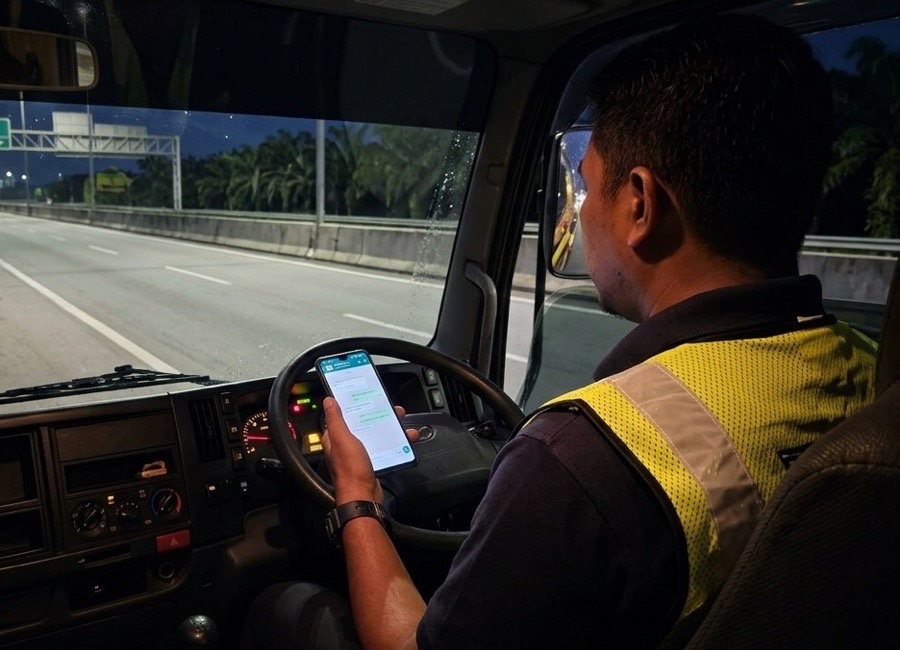
Stuck with an empty tank or a misfuel? Do not start experimenting on the road shoulder. WhatsApp Abang Tow — send your live location and vehicle type, get the price confirmed in chat first, and only then does a unit move.
- Check the distance covered since your last fill, not just the needle.
- Turn the key to ON and listen for the two-to-three-second pump hum before cranking.
- Wrong fuel in the tank — do not start the engine, arrange towing straight away.
- Strong fuel smell or a wet patch under the car — do not start the engine.
Immobiliser, Smart Key & Gear Selector — Silent Causes That Don't Need A Towing Service
A fair share of "my car won't start" cases are not faults at all. It is the car's security system doing exactly what it was built to do, and you just need to know how to talk it round.
The immobiliser reads a chip inside your key. If the battery in the remote or the smart key is weak, that chip cannot be read — the engine may crank but refuse to fire, or nothing happens at all. The giveaway is a car-and-key icon on the dashboard that keeps blinking.
The workaround most people do not know: most push-start cars have a backup reader coil. Hold the smart key against the start button, or drop it into the dedicated slot in the console, then try again.
Automatics will not start unless the selector is properly seated in P or N. A lever that looks like it is in P but is a notch out is enough to block the switch. Rock the lever, put it firmly back into P, press the brake hard, and try again.
One more: a locked steering column. If the key will not turn at all, rock the steering wheel left and right while turning the key gently. All of these checks are free — exhaust them before you call anyone.
- Immobiliser icon blinking — hold the smart key against the start button or the console slot.
- Remote range has been getting shorter for a while — change the coin cell inside the fob.
- Rock the gear lever, seat it firmly in P, press the brake hard before starting.
- Manual car — clutch flat to the floor. Steering locked — rock the wheel side to side.
Quick Roadside Checks To Run Before You Call 24 Hour Towing
Safety first, diagnosis second. If the car died on a highway shoulder, put the hazards on, get out through the passenger side, and stand behind the guardrail — not in the car, not beside the driver's door. Cars can be repaired; you cannot be replaced.
Once everyone is safe, run these seven steps in order. It saves far more time than guessing.
Keep the answer to every step. When you WhatsApp us later, something like "dashboard bright, one clunk, engine did not turn" is far more useful than "car rosak" — the right unit can be dispatched straight away, and the workshop already knows where to look.
- Step 1 — Hazards on, vehicle secured, passengers out of the traffic lane.
- Step 2 — Gear lever in P or N, brake or clutch fully down, steering not locked.
- Step 3 — Turn the key to ON only. Are the dashboard lights full brightness, dim, or dead?
- Step 4 — With everything quiet, listen for the two-to-three-second fuel pump hum.
- Step 5 — Check the fuel gauge and the warning icons: battery, engine, immobiliser.
- Step 6 — Try starting once only, and classify the sound: rapid clicking, single clunk, slow crank, or fast crank that never fires.
- Step 7 — Open the bonnet, check for loose or corroded battery terminals, and make sure there is no burning smell down there.
When A Jump Start Is Enough, And When The Car Must Go On A Flatbed Tow Truck
The dividing line is simple: a jump start only fixes problems that start at the battery. It repairs nothing else.
A jump start is enough when the dashboard lights up but the engine cranks slowly, there is an obvious reason like lights left on or the car sitting unused, and the engine runs steadily once it fires. Drive straight to the workshop — and do not switch the engine off halfway.
Beyond that, hauling the car is safer and usually cheaper than the damage that follows driving it. These are the situations we would tell you not to drive at all.
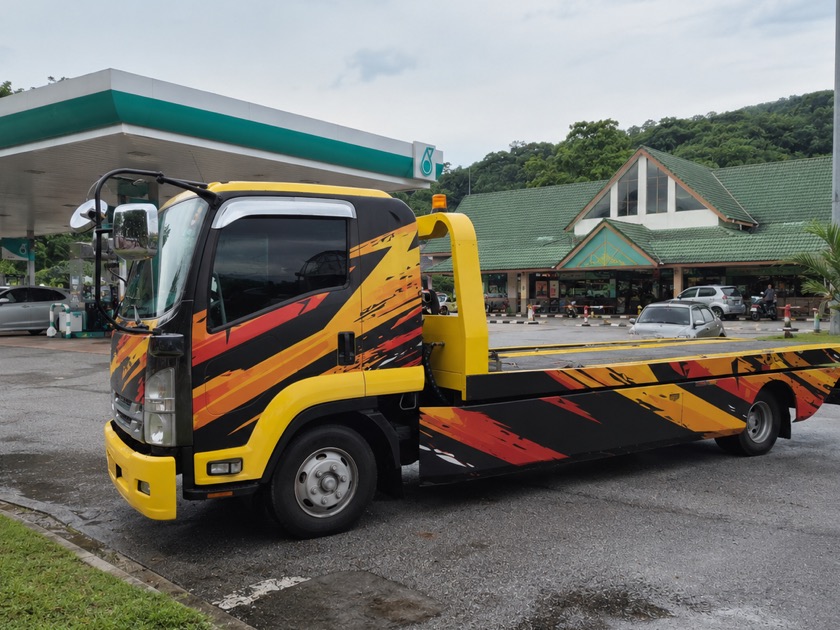
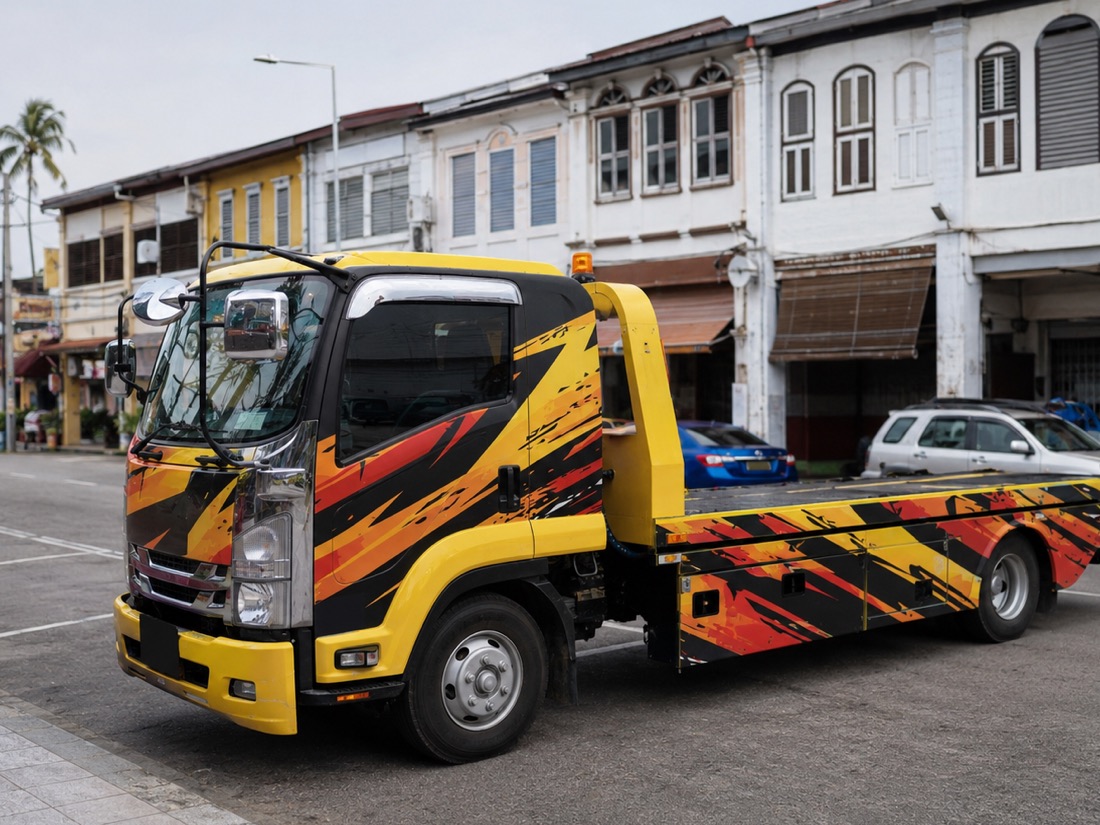
For automatics that cannot be released into neutral, and for EVs, flatbed towing is the correct method so every wheel is off the road. Tell us the vehicle type upfront so the matching unit is sent — the same applies to motorcycle towing and to lorry towing, where the unit is matched to 5-ton, 10-ton or 15-ton class.
Pricing does not need to be a mystery either. Deliveries under 50 km start from RM230, under 100 km from RM400, and under 150 km from RM450. The final quote is confirmed on WhatsApp before any unit moves.
- Jump start works but the car dies again once the cables come off — charging system, do not drive.
- One clunk and no crank even after a jump start — starter.
- Engine cranks fast but will not fire after several tries — stop, before you damage the catalytic converter.
- Wrong fuel in the tank, or the car has just been through flood water.
- Loud metallic knocking, or an engine that will not turn over at all.
- Smoke, a burnt smell, or melted wiring in the engine bay.
- Engine cut out after the temperature gauge went into the red.
- Stranded in a highway emergency lane — do not attempt repairs there.
Save A 24/7 Towing Number Before Your Car Dies On You Again
Cars never refuse to start at a convenient hour — it is a weekday morning, a rainy night, or somewhere you do not know your way around. What separates a miserable experience from a managed one is only two things: you roughly know the cause, and you have a number that answers.
If the car is still silent after every check above, stop trying. Each extra attempt drains what is left of the battery and can add damage on top.
WhatsApp Abang Tow now — send your live location, the vehicle type, and the sound you heard. The price is confirmed in chat first, then the unit moves, and the car goes to the workshop you choose. Standby 24/7, across Peninsular Malaysia.