Common Cases: Luxury Cars, Sports Cars And EVs That Need Flatbed Towing
There is one type of call that turns expensive faster than any other: a high-value car sitting dead by the road, and the person on the line saying "wheels are fine, just pull it." The problem is rarely the wheels. The problem is what happens to the car between the spot it died and the workshop door.
Luxury cars, sports coupes and modern EVs have three things an ordinary car does not: a very low underside, panels and paint that cost real money to put right, and a driveline that does not like being spun without being asked. One tow on its own wheels can solve tonight’s problem and open a second bill next week.
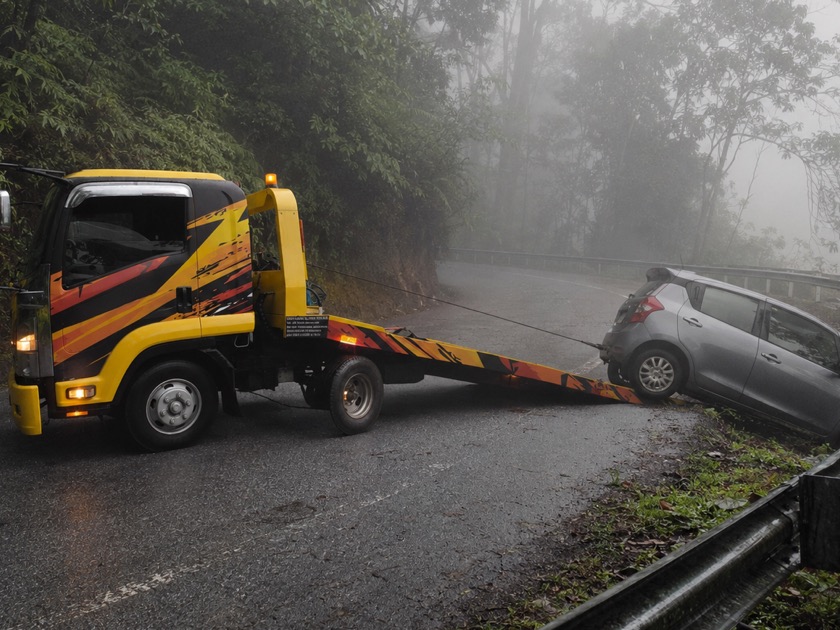
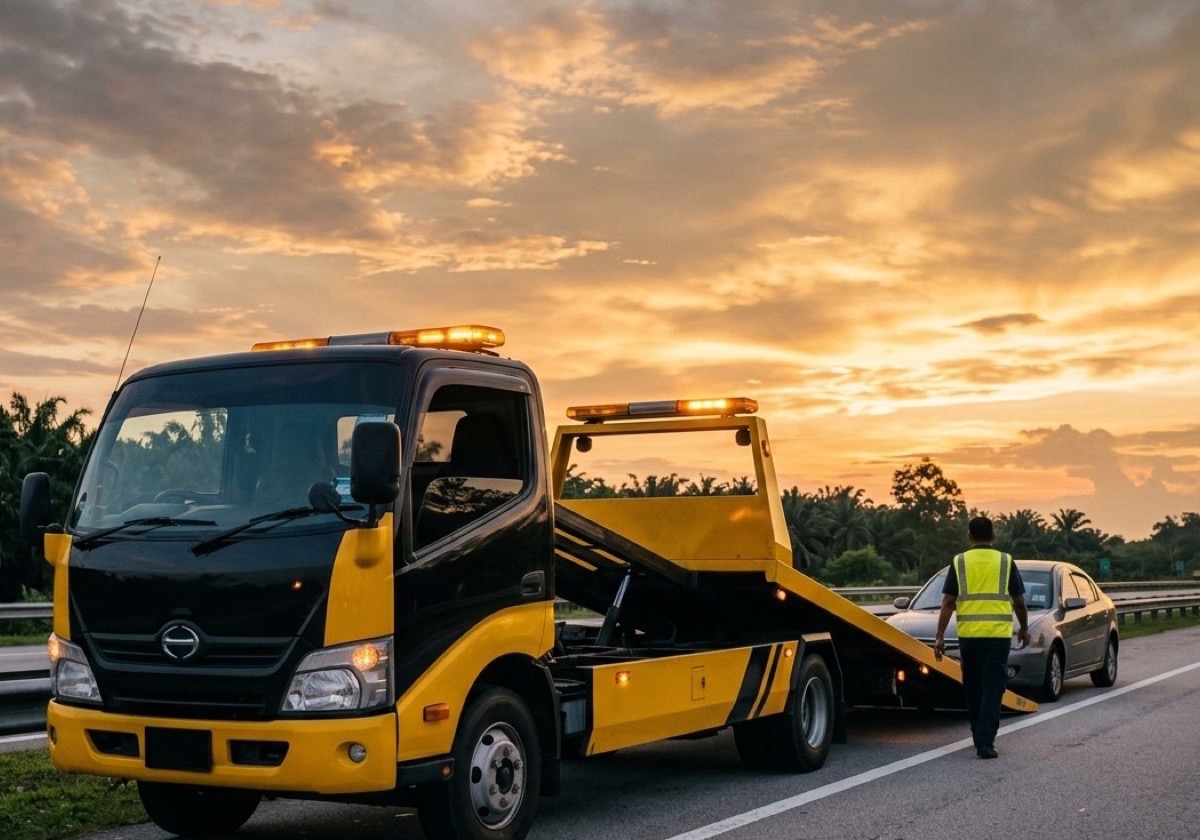
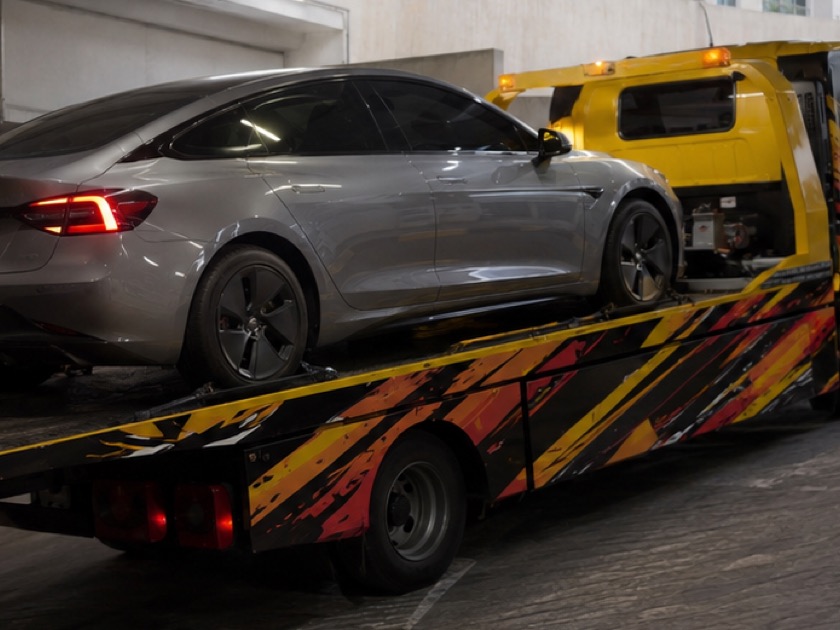
That is why for this category we go one way only — full flatbed. All four tyres up on the deck, not a single wheel turning for the whole trip. Not because a flatbed looks grander, but because it is the one method that takes the gearbox, the electric motor and the underside of the car out of the equation entirely.
This is also not roadside assistance work, where somebody jumps the battery and sends you on your way. Once a car in this class is down, the only question is how it gets lifted. The jobs that come in most often for this service:
- Sports cars and coupes with a low front lip — the bumper kisses the ramp before the tyres even reach the deck.
- Continental sedans with air suspension that has given up, so the body sits on the bump stops and the clearance disappears completely.
- EVs with no true neutral — the selector goes to N, but the drive wheels stay coupled straight to the motor.
- Cars running coilovers, a body kit, side skirts or an aftermarket diffuser.
- Classics and restoration projects with paint that is not just expensive, but hard to match again.
- High-value cars that break down in a low-ceiling basement car park, where the flatbed itself cannot get in.
Low Ground Clearance And Body Kits — When Flatbed Towing Needs Extension Ramps
That last case deserves an answer first, because it is the one most often misunderstood. When a flatbed cannot get into the basement, the car is not dragged up the car park ramp on its own wheels. It is winched slowly out to street level with wheel dollies under the tyres, then loaded onto the deck outside. The car still never rolls on its own wheels.
Now the ramp part. A flatbed deck tilts back and its edge touches the ground, which creates an approach angle. For an MPV or an SUV that angle is a non-issue. For a low car, that angle is exactly what tears the front lip off — and the damage happens in the first two seconds, before anyone can shout stop.
The fix is not to drive at it fast enough to "clear" it. The fix is to lengthen the ramp so the angle becomes shallower. Extension ramp boards go at the end of the deck, sometimes stacked in two stages, until the climb is a long slope instead of a step.
The loading procedure we follow for low cars:
- Find the flattest surface at the location — a sloped road adds to an approach angle that is already tight.
- Photograph the whole car first: bumper, sides, underside, rims. Record the condition before anything is touched.
- Sweep the deck clean of sand and gravel. Fine grit under a tyre or a strap is enough to leave a scratch.
- Raise the air suspension to service mode if the system still works, or lift the body with a jack at the approved jacking points.
- Fit extension ramps at the end of the deck, stacked in stages if needed, until the front lip clears.
- Load at a slight angle when the lip is very low — one tyre first, so the bumper meets the ramp at a softer angle.
- Move at walking pace, with a second person watching the underside from the side and giving hand signals.
- Stop in the final deck position before strapping, not after — a car nudged after it is strapped drags the straps across the paint.
Why EV Towing Cannot Be Done On Two Wheels — Drive Wheels And Tow Mode
EVs look easy because there is no multi-speed gearbox. That is actually the cause of the problem. An EV’s drive wheels are coupled straight to the electric motor through a single reduction gear, and there is no clutch to break that connection.
Tow the car with those two drive wheels still rolling on the road, and the motor spins along with them. A motor spinning while switched off behaves as a generator — it produces current and pushes it back into a system that may not be ready to receive it. Over a long trip, that is not a risk worth carrying just to save a bit of cost.
Second, plenty of EVs have no true neutral. The selector will go to N, but what releases is the parking pawl, not the motor connection. Some models also have to be put into tow mode or a dedicated transport mode before the electronic brakes truly release and the car stops trying to adjust its own ride height.
Third, the 12V battery. People forget an EV still carries a small 12V battery running the doors, the screens and the electronic parking brake. If that one is flat, the car cannot be released at all until an external supply is connected. Say so early if even the doors will not open.
Other EV and hybrid details that change how the job is run:
- Weight. The battery pack makes an EV heavier than a petrol car of the same size, so deck capacity and strapping are worked out from the actual weight, not a guess based on body size.
- Accidents involving the battery pack. If there is an odd smell, smoke, fluid leaking or a hot floor, tell us straight away. Vehicles like that are handled and parked differently — do not wait until it reaches the workshop to mention it.
- Hybrids. Some models can be towed in neutral under strict conditions, but those conditions differ by model and are easy to misread at the roadside. A flatbed removes the whole question.
- All-wheel drive, EV or petrol. Four connected wheels means no end of the car is safe to leave rolling. Flatbed or full dollies, there is no third option.
- Wheels locked after an accident. Tyres that will not turn need a set of dollies to get onto the deck — mention it early so the unit brings that gear along.
Over-Tyre Strapping And Paint Protection During Luxury Car Towing
If your car is sitting and waiting right now and you are not sure which category it falls into, do not guess. WhatsApp us with the model, your live location and the condition of the wheels — we decide the right unit and method, and the price is confirmed in chat before the unit rolls.
Once the car is on the deck, the real work starts. An ordinary car can be chained down at the chassis points. A luxury car cannot — a chain on a suspension arm can bend expensive alignment components, and a hook on a body kit will crack it.
The method we use is over-tyre strapping. Soft straps wrap over the tyre and press the wheel down onto the deck, so no load at all runs through the suspension, the chassis or the body panels. The suspension keeps moving as normal, and the car is not held compressed for the entire trip.
What gets watched all the way through the trip:
- Strap contact points are padded so no hard edge rubs against paint or a painted rim.
- Straps are routed well clear of brake calipers, sensors and hoses — not just clear of the panels you can see.
- Tension is rechecked after a while on the road, because tyres and straps settle slightly once the lori starts moving.
- Loose parts are secured first: a spoiler with cracked mountings, a hanging lip, a broken mirror, a dangling engine undertray.
- Mirrors folded in, the alarm disabled as far as it can be, and the steering left unlocked so the wheels do not fight during loading and unloading.
- Photos taken again once the car is strapped, before departure. A record at both ends — before loading and after strapping — protects both sides.
Delivery After Towing: Brand Service Centre, Specialist Workshop Or Home
The destination decides half the plan, so settle it early — not when the unit has already arrived.
Brand service centres run their own opening hours and their own receiving counter. If the car lands after hours, it may have to sit outside with nobody to sign for it. For a high-value vehicle, waiting until the counter opens is usually better than leaving the car with no formal handover. If you have a case number or the name of the person receiving it, send that along on WhatsApp.
Specialist workshops are a question of space. A small workshop packed with other cars cannot have a flatbed turning in front of its door. Ask first whether there is a flat unloading area, long enough for the ramps.
Delivering to a house holds the most surprises. Low porch roofs, narrow gates, sloped driveways, and housing lanes a long lori cannot get through. A low car coming down a sloped driveway can kiss the ground at the bottom of the slope even though it survived the whole journey. All of it is workable — as long as we hear about it beforehand.
For city jobs, our Kuala Lumpur towing coverage page has the full area list, and every other Peninsular state has a page of its own. For interstate towing, give the full destination upfront so the route and the timing are built into the quote.
On price, car jobs are worked out by distance — from RM230 for deliveries under 50 km, from RM400 under 100 km, and from RM450 under 150 km. Those are starting points; the final quote still comes through in chat before the unit moves, so there is no price conversation at the roadside.
Model And Modification Details We Need Before We Send A Tow Truck
Luxury car and EV jobs do not go badly because the work is hard — they go badly because the information arrives late. A unit that leaves without extension ramps, or without a set of dollies, has to turn back — and you are the one waiting longer.
Send these ten things in one message:
- Model and year of the car. Do not just say "white sedan" — the model decides ride height and lifting points.
- Powertrain: petrol, diesel, hybrid or full EV.
- Drive: front, rear or all-wheel.
- Ride height: standard, coilovers, or air suspension. If the air suspension has collapsed, say so.
- Body modifications: front lip, side skirts, diffuser, large spoiler, or big rims on low-profile tyres.
- Wheel condition: all turning freely, some locked, or a wheel off completely.
- Whether it will go into neutral, and whether the electronic parking brake can be released.
- Keys available or not, including the locking wheel nut key if the rims are locked.
- Exact location: highway shoulder, basement with the ceiling height noted, edge of a slope, or a narrow lane.
- Full destination: service centre, workshop, home, or another state.
High-Value Car, Do Not Take The Risk — 24 Hour Towing Service Across Peninsular Malaysia
The short version. For luxury cars, sports cars and EVs, the answer is always a full flatbed — not because it looks better, but because no wheel turns, no motor is forced to spin, and no load runs through the suspension or the body kit.
If you are still weighing up the two deck types for an ordinary vehicle, our flatbed versus wheel-lift guide explains when each one makes sense. And if terms like winching, rigging or dolly are still unfamiliar, our towing glossary spells them out in plain language.
When you are ready, WhatsApp Abang Tow with the ten details listed above. We match the right unit and equipment to your car, confirm the price in black and white before anything moves, and deliver it to the destination you name. Standby 24 hours — car towing, motorcycle towing and lorry towing, across Peninsular Malaysia.