Quick Summary — Why Your Transmission Type Decides The Car Towing Method
The question comes in almost every night: "it is an automatic, can just tow normally right?" The honest answer — yes, if you are happy to pay for a new gearbox next month.
The difference has nothing to do with the badge on the bonnet or the size of the car. It comes down to one thing only: how your gearbox gets its oil when the engine is dead.
A manual gearbox lubricates itself by splash. The gears turning inside scoop oil up from the bottom of the casing and throw it across everything in there — so even with the engine off, the internals stay wet.
An automatic is a different story. Its fluid is pushed around by a pump driven directly by the engine. Engine off, pump stops. But if the drive wheels are still rolling along the road, the internals of that gearbox keep turning anyway — turning dry.
That is the whole root of it. Every other rule grows out of that one difference — which wheels have to come off the ground, when dollies are needed, and when a flatbed stops being a preference and becomes a requirement.
- Automatic: the drive wheels must not be left spinning. Lift them, sit them on dollies, or send the car up onto a flatbed deck.
- Manual: neutral disconnects the gearbox from the engine, and the turning gears still lubricate themselves — so there is more room to work with, but it is not unlimited.
- AWD, 4WD, EVs and hybrids: all four wheels are linked, or the motor cannot be disconnected at all. Flatbed becomes the default.
Automatic Vs Manual Comparison Table — Which Tow Truck Methods Are Allowed
This is the version you can read in thirty seconds before you call. Each line compares automatic against manual on one point that actually changes the job at the scene — not workshop theory, but a decision that has to be made before the car moves.
- Gearbox lubrication — Automatic: the pump is engine-driven, so a dead engine means no fluid moving. · Manual: splash lubrication, where the turning gears throw their own oil around.
- Drive wheels rolling on the road — Automatic: no, unless the manufacturer allows it under specific stated conditions. · Manual: yes, in neutral, within limits.
- Safe default method — Automatic: flatbed, or a wheel-lift with the drive wheels raised. · Manual: a wheel-lift is enough for most ordinary cases.
- Need for dollies — Automatic: needed when the unit can only lift the end that is not the driven end. · Manual: rarely needed, unless a wheel is locked or a tyre is destroyed.
- Safe distance and speed — Automatic: follow the limits printed in the owner's manual; if you cannot find those figures, treat them as zero. · Manual: more relaxed, but limits still exist and they live in that same manual.
- Risk if you get it wrong — Automatic: internal clutches, bushes and bearings turning dry, heat building up, and damage that surfaces weeks later as slow engagement or a hard shift. · Manual: the risk to the gearbox is far lower; the real risk is a locked steering column and brakes with no servo assist.
- AWD and 4WD cases — Automatic or manual makes no difference. All four wheels are linked through a transfer case or a centre differential, so the answer is a flatbed or a full set of dollies.
- EV and hybrid cases — There is no manual equivalent. The motor is connected straight to the drive wheels and there is no clutch to break that link. Flatbed only.
How Automatic Car Towing Works — Drive Wheels, The Oil Pump, And Why Nothing Should Spin
Picture an automatic gearbox as a system that needs flow to stay alive. Its oil pump sits at the input end, driven directly by the engine. As long as the engine is turning, fluid is pushed through the whole system — through the torque converter, the internal clutches, the bushes and the bearings.
When the car is towed with its drive wheels still on the road, that flow runs backwards. The wheels turn the driveshaft, the driveshaft turns the internals of the gearbox, but the pump at the far end is not turning at all, because the engine is dead.
The result is metal turning on metal with no film of oil in between. At first there is no noise, no smell, nothing you would notice standing at the roadside. This kind of damage is quiet by nature — it arrives later as slow engagement, a jolt on the shift, or a slip on a climb.
So the rule for an automatic is short: the drive wheels must not spin. Front-wheel drive means the front wheels come up. Rear-wheel drive means the rear wheels come up — or the rear wheels sit on dollies if the front end is the one being lifted.
Some manufacturers do allow a short tow in neutral at low speed. That permission lives in the owner's manual, not in what a colleague at the office swears by. If you cannot flip open that manual at the roadside at two in the morning — and almost nobody can — assume the answer is no, and ask for the drive wheels to be lifted.
One more thing people miss: the steering lock and the electronic parking brake. Plenty of modern automatics lock the steering and hold the parking brake once the 12V battery has gone flat. If the car cannot be nudged even slightly, say so early so the unit brings dollies from the start instead of turning back for them later.
Manual Cars — When Neutral Is Enough For A Car Towing Job, And Where The Limits Are
A manual gets a little slack, and there is a clear engineering reason behind it.
There is no pump inside a manual gearbox. The gears scoop oil from the bottom of the casing and throw it across everything inside. When the drive wheels roll, the output gear turns — and that turning is exactly what keeps the turning parts lubricated.
Put it in neutral and the clutch breaks the link with the engine. The engine sits still, the gearbox turns and stays wet. That is why a manual can usually be towed with its drive wheels on the road without drama.
"Usually" is not "always". There are four limits, and every one of them has been the reason for a second call on the same night:
- A locked steering column. The ignition has to sit in the position that releases the steering lock. Otherwise the front wheels cannot be controlled at all — and a car on the hook has to track the truck, not fight it.
- No brake servo and no power steering. With the engine off, the pedal goes hard and the wheel goes heavy. Whoever is sitting in that car needs to know this before it moves, not after.
- Distance and speed limits still exist. Gearbox seals and bearings were never designed to turn for hours on end. The manufacturer manual is still the reference, not guesswork.
- A badly damaged manual. If it will not go into neutral, if the clutch is burnt, or if a wheel locked up after a crash, that slack disappears completely. That car gets lifted, not dragged.
AWD, 4WD And EVs — Why Flatbed Towing Is The Default, Not A Roadside Assistance Job
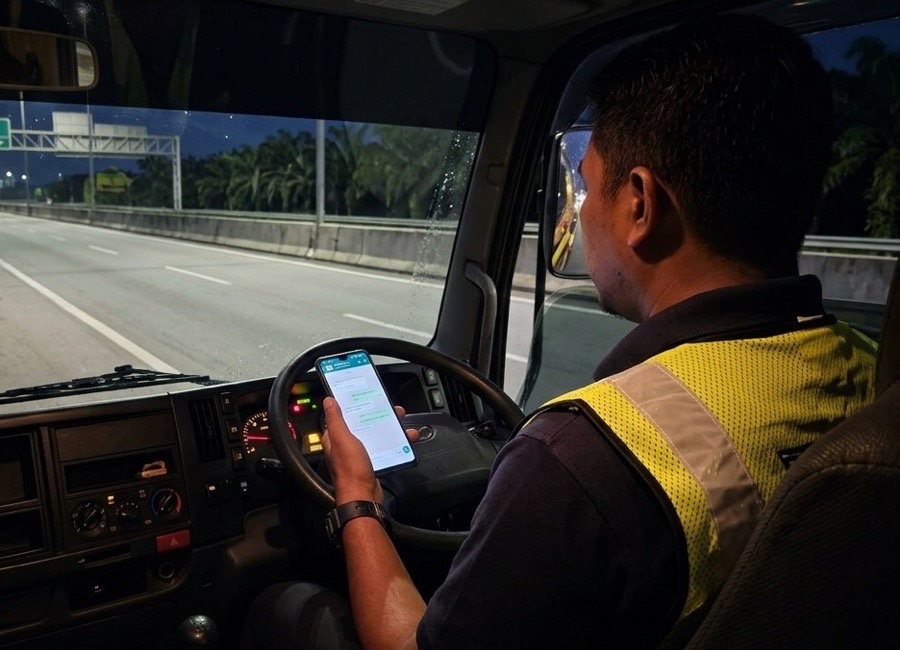
Not sure whether your car is a front-wheel drive automatic, a rear-wheel drive automatic or a manual? You do not have to be a mechanic to work it out. WhatsApp Abang Tow with the model and year, your live location, and whether the gearbox will go into neutral — we decide the right unit and the right method, and the price is confirmed in the chat before the unit moves.
For AWD and 4WD, the automatic-or-manual question stops mattering. The problem is not the gearbox — it is the transfer case and the centre differential linking the front axle to the rear.
Leave any two wheels rolling on the road and that rotation travels up the driveshaft into the entire driveline, including the axle that is supposed to be resting. Lifting the front end alone solves nothing; it just moves the load to the other end.
So two options are left: all four tyres up on the deck, or the two tyres still on the ground sitting on a set of dollies so they do not turn at all. There is no safe third option.
EVs are a case of their own. An EV drive wheel is connected straight to the electric motor through a single-speed gear, and there is no clutch to break that connection. Rolling wheels force the motor to turn, and a turning motor pushes current back into a system that may not be ready to take it.
On top of that, plenty of EVs have no real neutral. You can select N on the selector, but all that releases is the parking pawl — the motor stays connected. Some models have to be put into a dedicated tow mode before the electronic brakes truly let go. Every one of those questions disappears the moment the car is up on the deck.
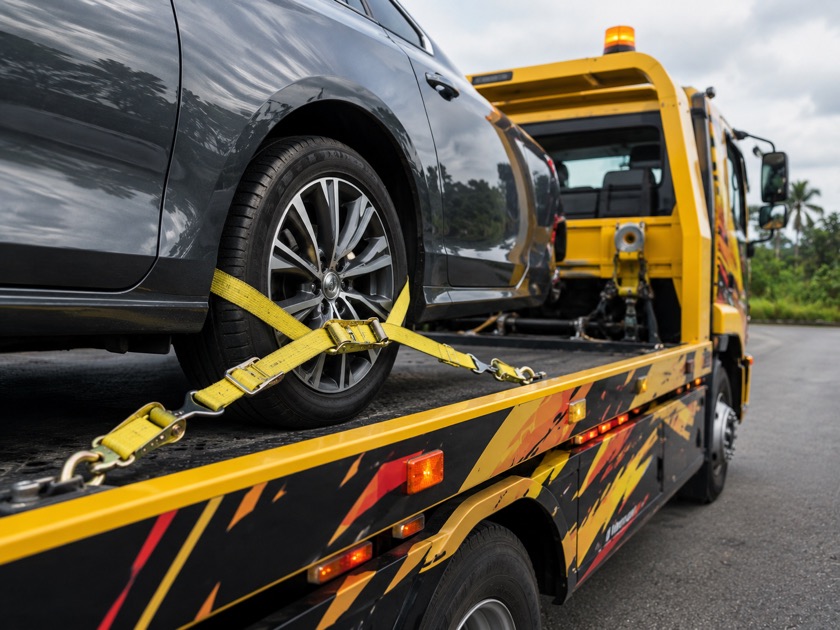
If your vehicle is an EV, a hybrid, a low sports car or a high-value continental, our page on how we tow luxury cars and EVs explains how the deck is prepared — extension ramps for low bumpers, and straps over the tyres so no load runs through the suspension or the body kit.
How To Confirm The Right Towing Method With The Operator Before The Tow Truck Moves
Most gearboxes ruined by a tow were not ruined by a careless operator. They were ruined because nobody asked the right question before the car moved — and once the car is on the road, somewhere between two R&R stops on the PLUS highway, nobody is stopping to check again.
Use this order. It takes two minutes, and do it in the chat so there is a written record:
- Give the model, the year and the transmission type — automatic, manual, CVT, dual-clutch or EV. "White sedan" tells the operator nothing.
- Say which wheels drive the car: front, rear or all four. If you are not sure, send the full model name and let the operator check it.
- Say whether the gearbox will go into neutral and whether the handbrake releases. That is what decides if dollies come along from the start.
- Describe the wheels: all turning freely, one locked, a flat tyre, or a wheel off completely.
- Ask outright: "which wheels are coming off the ground?" For a front-wheel drive automatic, the right answer has to be the front wheels.
- If the answer is that the drive wheels stay on the road, ask for the alternative — dollies or a flatbed. Do not feel shy about it; it is your car going up on that deck.
- Photograph the car before it is loaded: bumper, both sides, the underside and the rims. A before-and-after record protects both sides.
- Confirm the full destination and the price in the chat before the unit moves — not a price negotiation at the roadside with your hazards blinking.
Verdict By Situation — Wheel-Lift, Flatbed Towing, And When Interstate Towing Changes The Answer
If you want one short answer to keep in your phone, here it is:
- Manual, gearbox goes into neutral, short run across town to the workshop — a wheel-lift is enough, and usually the fastest to arrive.
- Front-wheel drive automatic — a wheel-lift with the front wheels raised. If the unit can only lift the rear, ask for dollies under the front wheels.
- Rear-wheel drive automatic — rear wheels raised, or dollies under the rear wheels if the front end is the one being lifted.
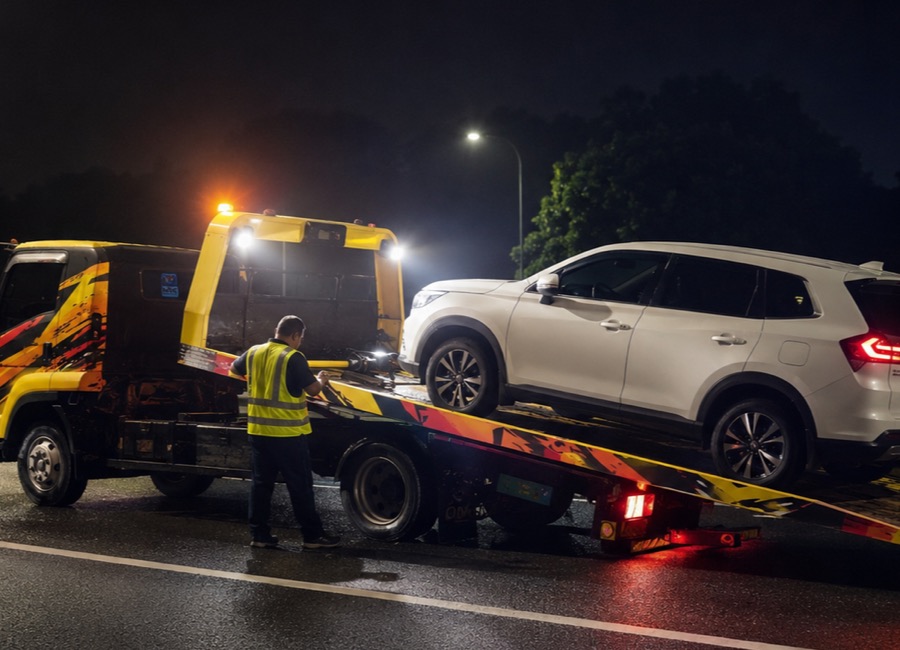
- AWD, 4WD, EV, hybrid, a low car or a high-value car — flatbed, no debate.
- Locked wheels, an accident car, a car down a drain or stuck in a low-ceiling basement — flatbed with a winch and dollies. Say so early so the gear comes along on the truck.
- Long interstate runs between states — flatbed, even if your car is a manual. Distance changes every one of the risk calculations above.
Do Not Guess — 24 Hour Car Towing, Motorcycle Towing And Lorry Towing Across Peninsular Malaysia
On long runs like the east coast route, distance itself becomes the deciding factor, not the transmission type any more. Our Terengganu towing coverage page has the detail for those roads, and every other Peninsular state has a page of its own.
If you are still weighing up the two types of deck, our flatbed versus wheel-lift guide explains when each one makes sense — including tight city lanes and basement car parks a flatbed lori simply cannot enter.
And if your car is stranded right now, do not waste time reading the manual by phone light. WhatsApp Abang Tow with the car model, the transmission type and your live location. We match the right unit and the right method for your car, the price is confirmed in black and white before anything moves, and the car is delivered to the destination you name. Standby 24 hours, across Peninsular Malaysia.